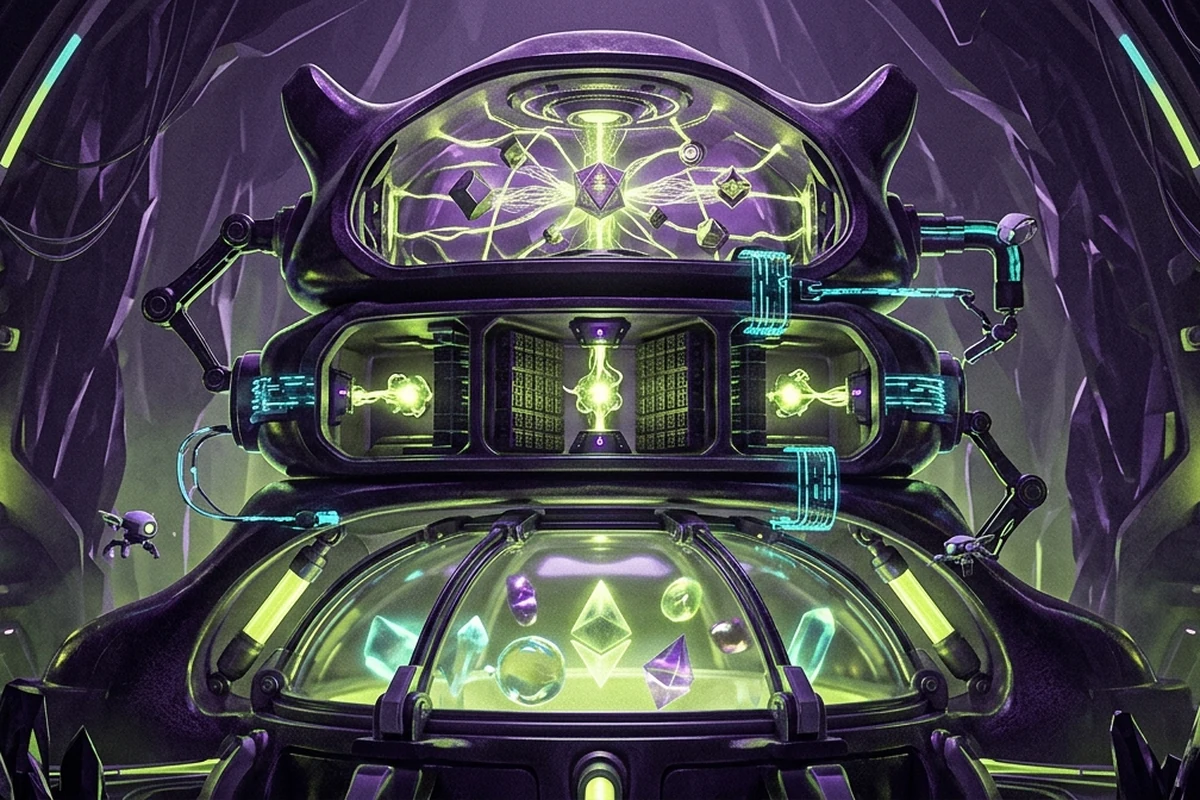
Quick answer: Cake Monster Gravity Vault Explained
The Gravity Vault was Cake Monster’s named reserve. Legacy contract flows converted part of collected MONSTA into CAKE and routed it to the vault. The reserve could support defined reward or cycle-end claims, subject to contract conditions.
How assets reached the vault
In the original design, half of the five-percent tax funded a temporary vault. Vault management used most of that balance to acquire CAKE and a smaller share to add liquidity.
Reserve does not mean redemption on demand
A token holder could not assume a continuous right to withdraw an equal share. Eligibility depended on specific snapshot, timing, cycle and claim rules.
How to audit a vault
Identify the exact vault address, inspect token balances, trace inflows and outflows, and read the implementation code governing claims. Dashboard numbers are secondary evidence.
Reserve balance, claim value and market value are different
The reserve balance answers what assets an address holds. Claim value asks which portion a particular wallet could receive under an active rule. Market value asks what those assets and MONSTA could actually be exchanged for after liquidity, tax and price impact. Those figures can diverge substantially.
An audit should follow CAKE into and out of the documented vault, identify strategy deposits or approvals, and reconcile distributions with claim events. If assets move through another staking or custody contract, that dependency belongs in the vault map rather than being treated as invisible yield.
Gravity Vault terms in plain English
| Term | What it means | What it does not prove |
|---|---|---|
| Vault balance | Assets visible at a vault address | That every holder can withdraw them |
| Reserve value | A market value at a chosen time | A fixed MONSTA price floor |
| Claim rule | Code and state that define eligibility | That an old dashboard remains active |
Tip: Use this comparison as a reading aid. Verify live values and contract state before making a current claim.
Gravity Vault evidence boundary
The archive can establish how the Gravity Vault was described, but it should not invent a current vault address or distributable balance when those facts have not been independently reconciled.
Design source
Whitepaper v1.4Documents the intended reserve and multi-asset-vault mechanics.
Inspect recordCurrent custody address
Unresolved in this snapshotA label or historic interface is insufficient; the address must be traced from current implementation storage or executed transfers.
Inspect record ↗Current distributable amount
Not claimedAn address balance alone would not prove allocation, eligibility or an active claim path.
Inspect record ↗Next reproducible step
Decode implementation storage and reserve-routing transactionsPublish the exact address, observation block, asset balances and controlling methods together.
Inspect recordRelated mechanics that change this conclusion
Place this guide beside its protocol mechanics neighbors before drawing a conclusion. Each link adds a contract, accounting or risk fact that changes how the main claim should be read.
Cake Monster Asset Vaults & Reserve Assets - A guide to the temporary vault, Gravity Vault and the later multi-asset framing.
MONSTA Market Cap vs Gravity Vault Value - Three numbers that sound comparable but answer different questions.
Cake Monster Vault Staking & Yield - Where reserve yield could come from and how to decompose its risks.
Estimate one holder's vault share as a proportional snapshot figure, not a redemption promise.
Verification checklist
- 01Identify every reserve-holding address.
- 02Reconcile inflows, strategy movements and claims.
- 03Calculate with eligible snapshot supply, not headline supply.
Questions about Cake Monster Gravity Vault Explained
Was all CAKE in the Gravity Vault distributable?
Not necessarily. Allocation percentages, cycle state, strategy positions and unclaimed balances could affect what was available.
Did a larger vault automatically raise MONSTA’s price?
No. The market still priced access, timing, contract risk and available trading liquidity.
Sources & evidence trail
- Cake Monster whitepaper v1.4Primary or technical reference
- MONSTA token contract on BscScanPrimary or technical reference
- Cake Monster record on DeFiLlamaPrimary or technical reference