Quick answer: MONSTA Transaction Tax Explained
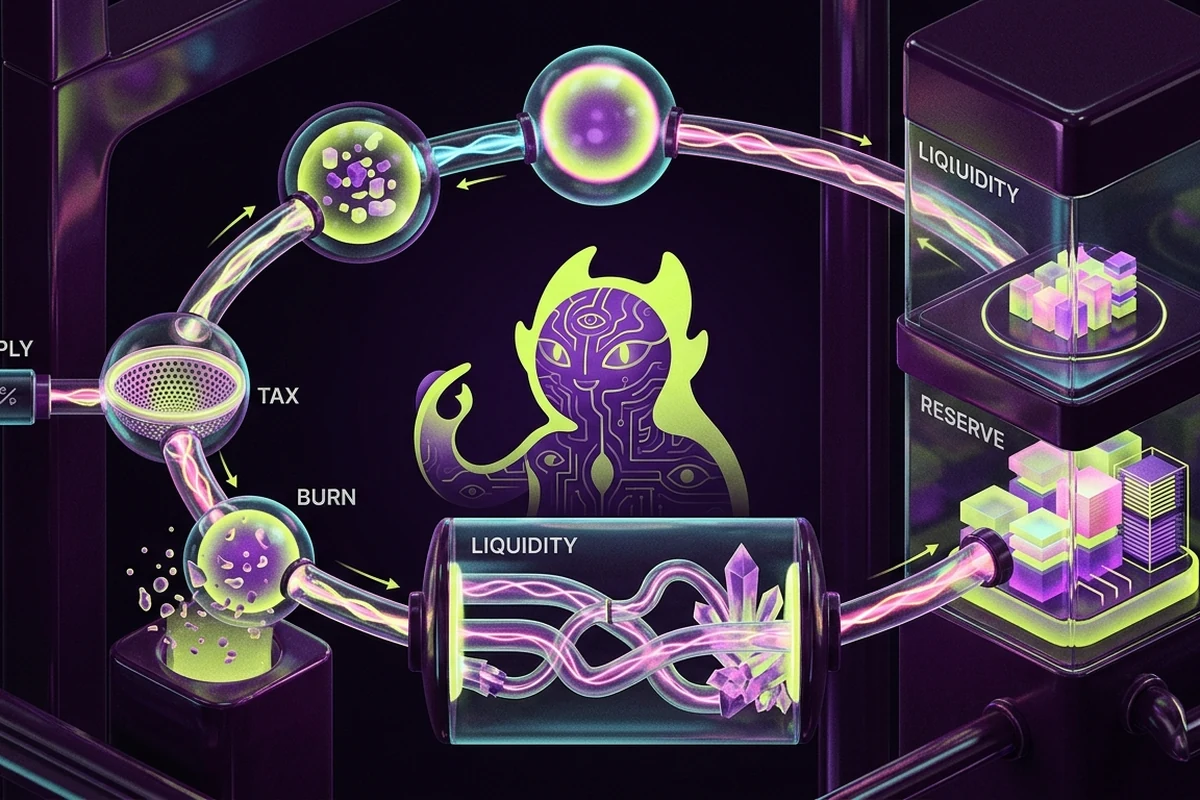
The original whitepaper specified a five-percent tax on buys, sells and transfers: 2.5% for burns and 2.5% for a temporary vault. Processing then routed value toward liquidity and CAKE. Exact present behavior must be checked in the active implementation.
The documented split
A transfer tax reduces the amount received or increases the economic cost of moving the token. In MONSTA’s first design, the two equal portions served supply reduction and vault accumulation.
Execution costs and slippage
Tax is only one cost. Pool fees, price impact, MEV, gas and extra contract calls can materially change the result.
Why simulation matters
Wallet and DEX interfaces may not fully explain a fee-on-transfer token. Simulate a small transaction and inspect balance changes rather than relying on the quoted output alone.
Model the complete cost of a MONSTA transaction
The documented five-percent tax was only one part of execution. A swap could also incur a pool fee, route through multiple pairs, move the pool price and consume BNB for gas. The amount displayed before signing therefore was not necessarily the amount received or later recoverable.
Exemptions and transaction classification matter. Contracts sometimes treat a transfer, buy and sell differently or exempt protocol addresses. Verify the active code path and compare sender and recipient balance changes in a transaction receipt instead of applying one percentage to every historic transfer.
Historic 5% tax example
| Step | Example | Plain meaning |
|---|---|---|
| Transfer input | 1,000 MONSTA | Amount before the modeled tax |
| Total tax | 50 MONSTA | Five percent of the input |
| Recipient estimate | 950 MONSTA | Amount before gas or price impact |
| Original split | 25 burn / 25 vault | The documented equal tax split |
Tip: Use this comparison as a reading aid. Verify live values and contract state before making a current claim.
Related accounting and market evidence
Place this guide beside its token economics neighbors before drawing a conclusion. Each link adds a contract, accounting or risk fact that changes how the main claim should be read.
MONSTA Fee-on-Transfer Token Risks - Compatibility, accounting and routing problems created when the received amount differs from the sent amount.
MONSTA Deflation Cycles Explained - How burns, minimum supply, cycle completion and reminting fit together.
MONSTA Liquidity & Price Impact - How pool depth, transfer tax and route selection affect executable prices.
Open the MONSTA tax simulator to test how a selected rate changes the received amount and modeled split.
Verification checklist
- 01Separate tax, pool fee, price impact and gas.
- 02Check exclusions for both sender and recipient.
- 03Reconcile actual balance deltas after execution.
Questions about MONSTA Transaction Tax Explained
Did the tax go directly to holders?
The original split described burn and temporary-vault paths; holder benefits depended on later reserve and claim mechanisms.
Can a DEX quote include every MONSTA cost?
Not always. Fee-on-transfer behavior and downstream processing may require a compatible router and post-transaction balance check.
Sources & evidence trail
- Cake Monster whitepaper v1.4Primary or technical reference
- MONSTA token contract on BscScanPrimary or technical reference
- PancakeSwap documentationPrimary or technical reference