Quick answer: MONSTA Tokenomics Explained
MONSTA tokenomics combined a large cycle supply with fee-on-transfer behavior, burns, protocol-owned reserve accumulation and conditional claims. Its economics cannot be understood from supply alone.
Stocks and flows
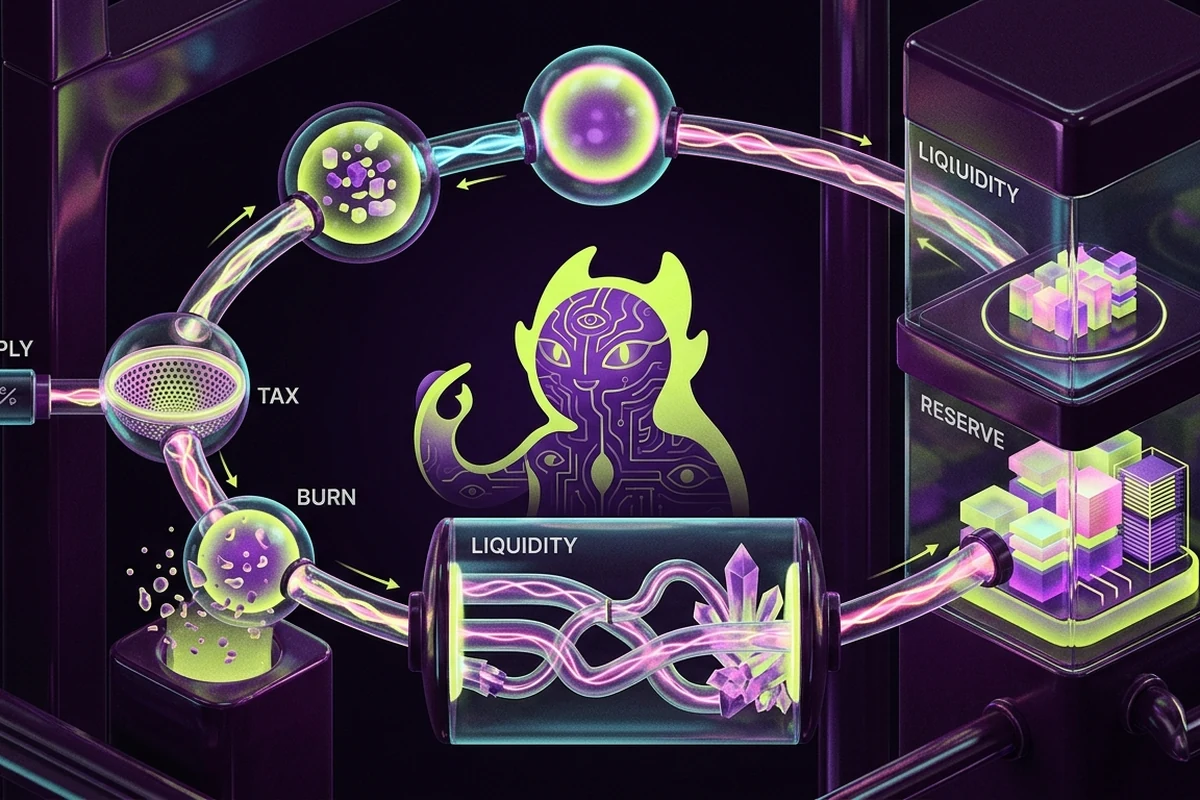
Supply is a stock. Tax, burns, swaps, mints and claims are flows. A clear analysis reconciles every flow to a contract event and balance change.
Reserve and liquidity
Reserve assets may support a future claim, while liquidity determines the ability to trade now. They are different pools with different rules.
Valuation caveat
A nominal reserve per token is not necessarily realizable. Eligibility, taxes, price impact, timing, upgrade control and legal uncertainty can create a large discount.
Build a MONSTA stock-and-flow model
Begin with supply held by wallets, pools, protocol contracts and burn addresses. Then add flows for transfers, taxed collections, burns, vault processing, liquidity operations, rewards, claims and authorized mints. Every flow should reconcile to events or balance changes for a defined block range.
Next add assets outside MONSTA: BNB in trading pairs, CAKE or other reserve assets and any strategy receipt tokens. This produces an economic map rather than a single supply chart and makes it possible to see when value moved between liquidity, reserves and claimants.
Related accounting and market evidence
Place this guide beside its token economics neighbors before drawing a conclusion. Each link adds a contract, accounting or risk fact that changes how the main claim should be read.
MONSTA Transaction Tax Explained - The legacy five-percent split, processing path and hidden assumptions behind tax-token economics.
MONSTA Deflation Cycles Explained - How burns, minimum supply, cycle completion and reminting fit together.
MONSTA Liquidity & Price Impact - How pool depth, transfer tax and route selection affect executable prices.
Verification checklist
- 01Reconcile supply categories at one block.
- 02Trace tax flows to final assets.
- 03Model claim dilution and relaunch separately.
Questions about MONSTA Tokenomics Explained
Was the original ten-billion supply the permanent maximum?
The cycle design discussed restoring supply at relaunch, so permanent-maximum language would omit an important rule.
Is burned MONSTA equivalent to reserve growth?
No. Burning changes token supply; reserve growth requires a separate acquisition and custody flow.
Sources & evidence trail
- Cake Monster whitepaper v1.4Primary or technical reference
- MONSTA token contract on BscScanPrimary or technical reference
- Cake Monster record on DeFiLlamaPrimary or technical reference